

Last updated: September 30th, 2026
As a B2B company grows, accounts payable outsourcing for growing businesses can turn a hidden operating bottleneck into a documented workflow. Invoices arrive through different channels, approvals depend on busy leaders, vendor records drift, and payment dates are difficult to see until cash is already committed. The result is not simply more administrative work. It is less confidence in what the business owes and when.
Schedule a free discovery call
A useful AP arrangement is more than software access and more focused than handing away financial control. It creates a documented process that makes exceptions visible, keeps records current, and connects daily invoice activity with cash planning and the monthly close. The first step is understanding what the operating model includes and where responsibility remains with your team.
What Is Accounts Payable Outsourcing for Growing Businesses?
Accounts payable outsourcing for growing businesses means assigning defined accounts payable responsibilities to an external accounting partner instead of keeping the entire process with a founder, office administrator, or internal finance team. The provider helps manage the workflow around invoices and payments, while the business retains appropriate authority over spending and payment decisions.
In practice, the outsourced operation may include receiving invoices, organizing supporting documents, coding transactions, routing items for approval, maintaining vendor records, preparing payment information, and handing completed activity back into the accounting records. The exact scope should be documented before work begins, because some providers handle only invoice data entry while others support a broader procure-to-pay process.
This is different from buying software and calling the process automated. Tools can capture documents, route approvals, or connect with an accounting platform, but they do not automatically define who reviews an invoice, resolves an unclear charge, maintains vendor information, or communicates when an exception needs attention. Outsourcing combines technology with people responsible for operating and monitoring the process.
How outsourced AP differs from generic bookkeeping
Bookkeeping records and reconciles financial activity after transactions occur. Accounts payable management focuses on the work leading up to those transactions: collecting invoices, confirming details, applying the right coding, obtaining approval, and preparing an accurate payment record. The two functions should connect, but they are not interchangeable.
For a growing business, that distinction matters. A clean monthly close cannot fully correct an invoice process that is inconsistent, undocumented, or dependent on one person remembering every outstanding request. A defined AP workflow gives the business a clearer view of obligations and creates a practical handoff between operations, approvers, payment activity, and the general ledger.
TeKoda lists Accounts Payable management as an add-on within its bookkeeping services, rather than implying that every AP responsibility is included in standard bookkeeping. Its service-delivery materials identify Bill.com for AP automation, QuickBooks Online as its primary accounting platform, and Dext for document management. Those tools are part of the documented technology context, not a promise that every business will use the same configuration. The right scope depends on the company’s systems, approval structure, invoice volume, and reporting needs.
Which Accounts Payable Tasks Can You Outsource?
Outsourced accounts payable can cover the operational work that moves an invoice from receipt to reconciliation. A provider may capture documents, organize vendor and coding data, route approvals, prepare payments, maintain records, and hand completed activity to the bookkeeping team. Your business retains appropriate decision-making authority while the workflow becomes documented and repeatable.
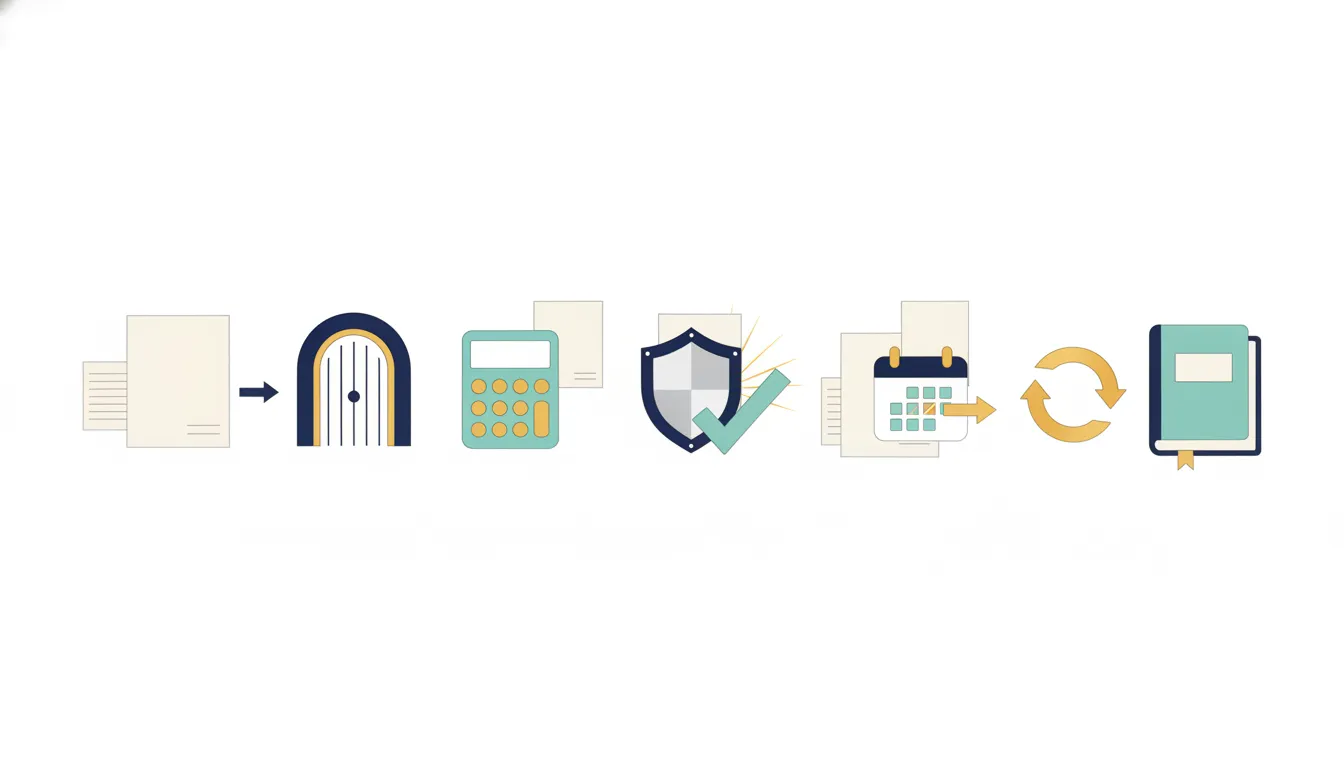
- Invoice intake and capture: Collect invoices from approved email, electronic, or other agreed channels; check that essential details are present; and enter or organize the information in the accounting workflow. A clear intake process reduces the chance that an invoice remains in an inbox or gets processed twice.
- Coding and vendor records: Assign the appropriate account, department, project, or class based on your chart of accounts and established rules. The process can also maintain vendor names, payment terms, contact details, purchase order references, and supporting documentation. When coding is uncertain, the outsourced team should flag the exception rather than guess.
- Approval routing: Send invoices to the right business owner, department leader, or budget holder for review. The approval path should reflect who requested the purchase, who received the goods or services, and who is authorized to approve the expense. For larger or unusual transactions, additional review may be appropriate.
- Payment preparation: Build an approved payment queue, confirm due dates and supporting records, and prepare payment details for the person authorized to release funds. Preparing a payment is not the same as approving or executing it. Those responsibilities should be defined clearly in the operating agreement and reviewed with your accounting partner.
- Vendor maintenance: Keep vendor records current when a supplier changes its name, address, payment terms, or banking information. Requests that affect payment details should follow a separate verification and approval process. Vendor maintenance is an operational task, but it also deserves careful oversight.
- Reconciliation handoffs: Provide the bookkeeping team with an organized record of invoices, approvals, payments, exceptions, and unresolved items. That information supports account reconciliation and helps ensure liabilities are reflected in the right reporting period. Regular reconciliation is a useful check that transaction records agree with official accounting records, as described by UC San Diego’s internal-control guidance.
These tasks can be supported by technology and human review. TeKoda’s service-delivery materials identify Bill.com for accounts payable automation, QuickBooks Online as its primary accounting platform, and Dext for document management. The specific workflow depends on the systems, approval structure, and scope agreed for your business. AP management is listed as an add-on to TeKoda’s bookkeeping services, so confirm which responsibilities are included before implementation.
How Does Accounts Payable Outsourcing for Growing Businesses Protect Payment Decisions?
Good accounts payable controls make payment decisions reviewable, intentional, and aligned with the business’s authority structure. They do not eliminate every risk, and they should be designed around the company’s size, systems, vendors, and staffing. When evaluating an AP provider, ask how the provider will help document these controls and how your team will retain appropriate oversight.
Separate preparation, approval, and reconciliation
Role separation is a foundational control. The person who enters or codes an invoice should not automatically be the only person who approves it, prepares the payment, and reconciles the related bank activity. The University of Toledo’s AP checklist specifically recommends separating invoice processing, disbursement, vendor maintenance, bank reconciliation, and related accounting duties. UC San Diego likewise describes separation of duties as dividing responsibilities so one person does not control every part of a transaction.
In practice, an outsourced workflow might assign invoice intake and coding to one role, route the invoice to an authorized business approver, and reserve reconciliation or review for another person. The exact arrangement depends on your staffing model. Smaller businesses may need compensating reviews when full separation is not practical. The important point is to identify who performs each step and where an independent check occurs.
Define approval authority and verify the underlying purchase
Approval should confirm more than a familiar vendor name. It should establish that the purchase was appropriate, supported by documentation, and authorized by the right person. Tennessee’s accounts payable procedure assigns the authorized department approver responsibility for appropriateness, supporting documentation, and reasonableness. Cornell’s documented workflow also checks whether the requester has authority to commit funds before processing a payment request.
Ask an AP provider to help map your approval roles, required documentation, and escalation path. Do not assume that a provider’s standard workflow matches your organization. Set the rules with the people who own the budget and operations, then review them when responsibilities change.
Protect vendor records and investigate changes
Vendor maintenance deserves its own control rather than being treated as a routine administrative task. A request to change bank details, a new vendor, an unusual invoice, or a mismatch between the invoice and purchase records should receive additional verification through a trusted, independent channel. Keep the change request, verification steps, approver, and effective date in the system record.
Access reviews support this process. Periodically review who can create vendors, edit payment details, approve invoices, release payments, and view sensitive financial information. Remove access that is no longer needed, and update authorization records as people change roles. UC San Diego recommends periodically reviewing and updating signature authorizations.
Maintain an audit trail and manage exceptions
A useful audit trail shows what was received, who coded it, what documentation supported it, who approved it, and what happened when something did not match. The University of Toledo recommends reviewing unusual or significant transactions separately and reconciling invoice-entry totals to system reports. These practices create evidence for follow-up without assuming that automation can decide every case correctly.
Define exceptions before they arise. An invoice with a missing purchase order, duplicate details, an unexpected vendor change, or a receiving mismatch should pause for review rather than quietly moving through the queue. An AP provider can help document the exception, route it to the responsible business owner, and record the resolution. That visibility is the practical value of control design: leaders can understand what was paid, why it was approved, and which decisions still require their judgment.
How Does Outsourced AP Improve Cash Timing and Visibility?
Cash visibility depends on more than the balance in a bank account. It also depends on whether every invoice has been captured, coded, approved, and assigned a realistic payment date. A consistent accounts payable process gives business leaders a clearer view of obligations before they become urgent, while preserving the information needed for forecasting and month-end reporting.
Invoice completeness is the starting point. Invoices arriving through scattered email inboxes, paper files, or individual employee accounts can remain outside the accounting records until someone remembers to forward them. An outsourced AP workflow can establish a central intake process, document missing information, and track invoices that are awaiting coding, approval, or supporting documentation. That makes the list of upcoming obligations more dependable.
Use due dates and cutoffs to plan payment timing
Once invoices are recorded consistently, payment terms and due dates can be reviewed as part of a payment calendar. The calendar should distinguish invoices that are ready for payment from those held for approval, a disputed charge, incomplete documentation, or a missing purchase reference. This does not mean paying every invoice immediately. It means deciding when each obligation should be addressed based on its due date, internal approval process, available cash, and established business policies.
Defined cutoffs also reduce last-minute surprises. For example, a business can set a recurring deadline for submitting invoices before a payment run or month-end close. Exceptions can then be surfaced deliberately instead of being discovered when a vendor follows up. A documented process may also help leaders evaluate whether payment delays are creating avoidable vendor friction, interest charges, or credit holds. Cornell’s invoice-processing narrative identifies those as possible consequences of failing to pay invoices promptly: Cornell invoice-processing guidance.
Connect AP records to forecasts and the monthly close
Reliable AP data improves the quality of a cash forecast because expected outflows are based on recorded obligations rather than memory. It also helps the accounting team identify expenses that belong in the correct reporting period, reconcile accounts, and explain changes in cash during the close. TeKoda’s broader bookkeeping support includes monthly reconciliations and preparation of the Balance Sheet, Income Statement, and Statement of Cash Flows. AP management is listed as an additional service, so its scope should be defined separately from a standard bookkeeping package.
For a broader view of working capital decisions, review this guide to cash flow planning for growing businesses. The AP workflow also fits into a proactive monthly financial close, where invoice status, accrual questions, reconciliations, and outstanding exceptions are reviewed on a defined cadence. Together, these practices help leaders move from reacting to payment requests to understanding upcoming cash commitments before making operating decisions.
When Should a Growing Business Outsource Accounts Payable?
There is no single invoice count that determines when outsourcing makes sense. The stronger test is whether accounts payable has become a recurring operational bottleneck. If invoices are difficult to find, approvals depend on one person, or vendor information is unreliable, the business may need a documented process and dedicated ownership rather than another informal workaround.
Invoice volume is increasing faster than the process can handle
Growth often adds vendors, locations, subscriptions, contractors, and recurring bills before it adds finance capacity. A founder or operations lead may still be reviewing every invoice, entering details manually, and answering payment-status questions. Watch for backlogs, duplicate follow-ups, inconsistent coding, or a growing number of invoices processed outside the normal system. Processing volume, error rates, and time to pay are useful measures when deciding whether the current approach is keeping pace. The University of Toledo’s AP checklist identifies these as practical efficiency measures.
Founder or leadership time is trapped in routine approvals
Leadership involvement is appropriate for important spending decisions. But it should not require a founder to search for every invoice or serve as the only person who knows what is due. A clear approval map can preserve decision authority while assigning routine capture, coding, documentation, and follow-up to the right role. If payments stall whenever one person is traveling or focused on sales, product, or client delivery, the process is too dependent on an individual.
Approvals, vendor records, or supporting documents are unreliable
Repeated missed approvals are more than an administrative annoyance. They can make payment timing unpredictable and weaken visibility into upcoming obligations. Similarly, outdated vendor details, missing contracts, inconsistent account coding, or invoices that cannot be matched to the underlying purchase make review harder. These are signs that the business needs defined ownership, an exception process, and records that another person can understand without reconstructing the history.
You need a process that can scale and be handed off
Outsourcing is worth evaluating when AP knowledge lives in email threads, spreadsheets, or one employee’s memory. A documented workflow should explain where invoices arrive, who reviews them, what evidence is required, how exceptions are resolved, and how completed activity reaches the accounting records. This creates continuity as the company grows or responsibilities change. For a broader comparison of coverage and scalability, review outsourcing bookkeeping for a growing business.
For many B2B companies, the decision is not simply whether to hire or outsource one task. It is whether AP has become important enough to deserve consistent ownership, documented controls, and a workflow that supports growth without keeping leadership in the weeds.
How Do You Implement Accounts Payable Outsourcing?
A successful transition is less about moving invoices to a new inbox and more about making responsibilities visible. For accounts payable outsourcing for growing businesses, the implementation should define what the provider handles, what stays with your team, how approvals work, and how the records connect to reporting. TeKoda uses the five-stage TeKoda Way to bring that structure into the transition.
Stabilize the current process
Start by documenting how invoices arrive, where they are stored, who reviews them, how vendors are maintained, and how payment decisions are currently made. Gather open invoices, recurring bills, vendor records, contracts, purchase orders, and any existing approval instructions. This baseline helps identify overdue items, duplicate records, missing documentation, and informal steps that should not be carried into the new workflow.
Understand the scope and systems
Agree on the AP activities included in the engagement. Scope may cover invoice intake, coding, approval routing, vendor-record maintenance, payment preparation, reporting, or selected handoffs. But it should not be assumed that every AP task is included in standard bookkeeping. TeKoda lists Accounts Payable management as an add-on service. Its service-delivery materials identify Bill.com for AP automation, QuickBooks Online as the primary accounting platform, and Dext for document management. Confirm which systems your business uses, what information must flow between them, and who owns each action. This can be coordinated alongside bookkeeping services.
Plan vendor records and the approval map
Clean the vendor list before cutover. Standardize names, payment terms, contact details, account coding, contracts, and recurring obligations. Then create an approval map that names the business owner or department responsible for confirming the purchase, the person reviewing the invoice, and the person authorized to approve payment. Define how exceptions, missing receipts, disputed charges, urgent invoices, and vendor-detail changes are escalated. The provider should document the workflow rather than rely on verbal instructions.
Decide the cutover approach
Choose a clear start date and decide how invoices already in progress will be handled. A short parallel review can help compare the new coding, approval, and recordkeeping process with the old one before the handoff is complete. Set an invoice-submission channel, cutoff schedule, approval response expectation, and method for reporting unresolved items. Do not leave a gap between the final internal process and the provider’s first operating day.
Grow through review and refinement
After launch, schedule regular reviews of open invoices, approval delays, vendor-record changes, exceptions, and reporting handoffs. Connect AP information to reconciliations and monthly financial reporting so leaders can see obligations alongside cash-flow decisions. TeKoda describes a dedicated bookkeeper, broader expert support, and documented process handoff as parts of its service model. Standard onboarding is typically under five business days after discovery, proposal, and implementation, although complex setups require a custom timeline. To discuss scope and fit, you can schedule a free discovery call.
What Should You Ask Before Choosing an AP Partner?
Choosing a provider for accounts payable outsourcing for growing businesses requires more than checking whether invoices can be uploaded to a platform. The right partner should fit your approval culture, accounting system, vendor relationships, reporting needs, and plans for growth. Use the questions below to make the evaluation specific and comparable.
| Evaluation area | Questions to ask | What a useful answer should clarify |
|---|---|---|
| Scope | Which tasks are included, and which remain with our team? Who handles invoice intake, coding, approvals, vendor records, payment preparation, and reconciliation handoffs? | A written division of responsibilities, including exceptions and work that may be an add-on rather than part of standard bookkeeping. |
| Systems | Which accounting and AP tools do you support? How will information move between our accounting platform, document tools, and payment workflow? | A practical implementation plan that names supported systems without assuming automation will remove the need for review. TeKoda’s service materials identify QuickBooks Online, Bill.com, and Dext as technology used in its delivery model. |
| Controls | How are approval authority, vendor changes, duplicate invoices, unusual transactions, and payment authorization handled? | Documented control steps, role separation, exception escalation, access review, and a clear statement of what your business must approve. No provider should promise that controls eliminate every risk. |
| Communication | Who is our day-to-day contact? How are missing documents, disputed invoices, urgent items, and stalled approvals communicated? | Named ownership, response expectations, escalation paths, and a process that does not leave important questions inside an unattended inbox. |
| Reporting and handoffs | What will we see each month? How does AP information support reconciliations, financial statements, cash planning, and the month-end close? | Defined reports and a repeatable handoff. Ask how a dedicated bookkeeper, wider accounting team, and documented processes work together when someone is unavailable. |
| Pricing transparency | How is the fee determined, what changes the scope, and how are additional services approved? | A custom proposal tied to volume, complexity, systems, and responsibilities, with no vague promise that every AP task is included in a base package. |
Ask for the answers in writing, then compare the proposed workflow with your actual approval and payment process. A partner that explains limitations clearly is often more useful than one that presents software as a complete operating model. The goal is a stable process your team can understand, review, and improve as the business grows.
Schedule a free discovery call
Frequently Asked Questions
How much does it cost to outsource accounts payable?
There is no useful universal price because scope varies by invoice volume, approval complexity, systems, vendor maintenance, and whether payment preparation is included. Ask each provider to define the services, onboarding work, reporting, and ongoing responsibilities in writing. For TeKoda, Accounts Payable management is an add-on service. So the right next step is to discuss your workflow and required scope rather than assume it is included in standard bookkeeping.
What is the best accounts payable system for a growing business?
The best system is the one that fits your accounting platform, invoice volume, approval process, and reporting needs. TeKoda’s service-delivery materials identify Bill.com for AP automation, QuickBooks Online as its primary accounting platform, and Dext for receipt and document management. Treat those as technology options to evaluate, not a substitute for documenting responsibilities and controls.
How should a business choose an accounts payable outsourcing provider?
Choose a provider that can explain invoice intake, coding, approval routing, vendor-record changes, payment authorization, exception handling, reconciliations, and communication. Confirm who owns each step, how handoffs are documented, what reports you receive, and how the process will adapt as your business grows. A dedicated contact plus access to a broader accounting team can also support continuity.
Is artificial intelligence replacing accounts payable teams?
AI and automation can assist with invoice capture, data extraction, matching, and workflow routing, but they do not remove the need for accountable review. Growing businesses still need people to resolve exceptions, validate vendor information, assess unusual transactions, maintain approval authority, and connect AP activity to cash decisions. Technology works best when it supports a documented process and clear human ownership.
Schedule a Free Discovery Call
Discuss the right accounts payable scope and implementation approach for your growing business. TeKoda can help you evaluate the process, systems, and support your team needs. Schedule a free discovery call to get started.
