

Most small business failures stem from a lack of cash rather than a lack of profit. You might have full calendars and growing teams, yet still struggle to meet your next payroll. Cash flow management for small business is the discipline of tracking every dollar that enters and leaves your company to ensure you stay in business. It requires more than checking your bank balance; it demands good plans for future sales and costs to find gaps before they happen. According to U.S. Bank, this work is vital to keep enough cash to cover daily operations, pay your team, and grow. Our Virtual Outsourced Bookkeeping Services for Growing Businesses help you Stabilize and Plan for the future.
Schedule Your Free Call Now — Get clear on your cash position in your first conversation.
Cash Flow Management For Small Business: Why Cash Flow Management Breaks Down as Businesses Scale
Cash flow management for small business breaks down during growth because the timing between spending money on growth and collecting revenue from that growth widens. When you hire staff, buy inventory, or lease space, the cash leaves your account today, but the revenue from those investments may not arrive for weeks or months. This timing gap is the single most common reason scaling companies run out of cash.
The Timing Gap Between Costs and Revenue
When your firm grows, you often have to spend money before you make it. You might hire new staff, buy more stock, or lease a larger office to keep up with demand. These costs hit your bank account today, but the money from that growth might not arrive for weeks or months. This creates a timing gap that can strain your cash. Research from Yale shows that cash flow tracks how money moves in and out of your firm. Fixed costs like rent stay the same, but variable costs for sales can rise fast. Good bookkeeping and financial planning for small business helps you see these gaps before they become a problem.
Pressure from a Longer Cash Cycle
As you scale, your cash cycle often gets longer. You may need to hold more stock to serve more people, which ties up cash on shelves. Large clients often ask for more time to pay, like 60 or 90 days. While your sales look good on paper, your real cash stays locked in unpaid bills. Based on research from U.S. Bank, handling this cycle is vital for staying safe while you grow. Without a clear view of when cash will land, you might struggle to pay your own bills on time.
The Impact of Rising Costs and Market Shifts
High prices add a new layer of risk to cash flow management for small business. Rising costs for goods and labor can eat into your gains and shrink your cash. The SBA notes that poor cash flow is a top cause of small business failure. You must stay alert to ensure you can grow without running out of the funds you need. This is why the first step of the TeKoda Way is to fix your cash flow so you can focus on the next phase of growth.
What Is the Difference Between Profit and Cash Flow, and Why Does It Matter?
Profit and cash flow measure two different things. Profit tells you if your business model is making money over time on an accrual basis. Cash flow tells you if you can pay your bills today. A business can show a large profit while its bank account is empty, which is why tracking both metrics is essential for survival.
Profit and cash flow track two very different parts of your financial health. Profit tells you if your business model is making money over time. Cash flow tells you if you can pay your bills today. Knowing this gap is vital for any growing company.
What Is Profit?
Profit is what stays after you subtract your total costs from your total sales. Most firms track this on an accrual basis. This means you record a sale the moment you send an invoice. This view is helpful for reading your profit and loss statement to see if your pricing is right. But profit is just a number until the money really hits your bank account.
A business can show a large profit while its bank account is empty. This often happens when you have many customers who have not paid their bills yet. You have earned the sales, so it counts as profit. But you cannot use that profit to pay your staff or your rent until the cash comes in. This is why profit alone can be a misleading metric for daily operations.
What Is Cash Flow?
Cash flow is the movement of money in and out of your business accounts. It is the real-world view of your funds. According to cash management principles from Yale, this includes all the cash entering and leaving a company. It tracks the exact timing of when you get paid and when you pay others. This is why it is the most critical metric for staying in business.
Positive cash flow means you have more money coming in than going out. It allows you to buy new gear, hire talent, and handle new costs. Negative cash flow means you are spending more than you are taking in. Even if your sales are high, negative cash flow can force a business to close.
The Profitable but Broke Trap
Many scaling companies fall into the profitable but broke trap. This happens when growth requires you to spend cash upfront for inventory or hiring. You might land a large new contract that makes your profit soar. However, if that client takes 60 days to pay, you might run out of cash before the check clears. This pressure has grown as small businesses face rising input costs across nearly every category.
When you scale, your cash cycle often gets longer. You buy more supplies and hire more people before you see the sales from those moves. This gap is why cash flow problems cause most business failures. Professional bookkeeping services help you spot these gaps early. This allows you to plan for growth without risking the health of your company.
| Metric | Profit | Cash Flow |
|---|---|---|
| What it measures | Revenue minus expenses over time | Actual money moving in and out |
| Accounting basis | Accrual (recorded when invoiced) | Cash basis (recorded when paid) |
| Tells you | If your business model works | If you can pay bills today |
| Can be positive | Yes, while bank account is empty | No, positive means cash in bank |
| Shows on | Income statement (P&L) | Cash flow statement |
| Risk when ignored | Miss pricing errors | Business cannot pay its bills |
When you rely only on profit, you miss the timing of real money. A profitable month can still leave you short if clients are slow to pay. That is why you need both metrics to run your business well. Profit tells you if your model works. Cash flow tells you if you can keep the lights on while you grow.
How Do You Create a 13-Week Cash Flow Forecasting Process for a Small Business?
A 13-week cash flow forecast is a rolling projection that shows where your money is now and where it will go over the next 90 days. You build it by starting with your current cash balance, projecting expected inflows and outflows week by week, and updating it every week to maintain a forward-looking view.
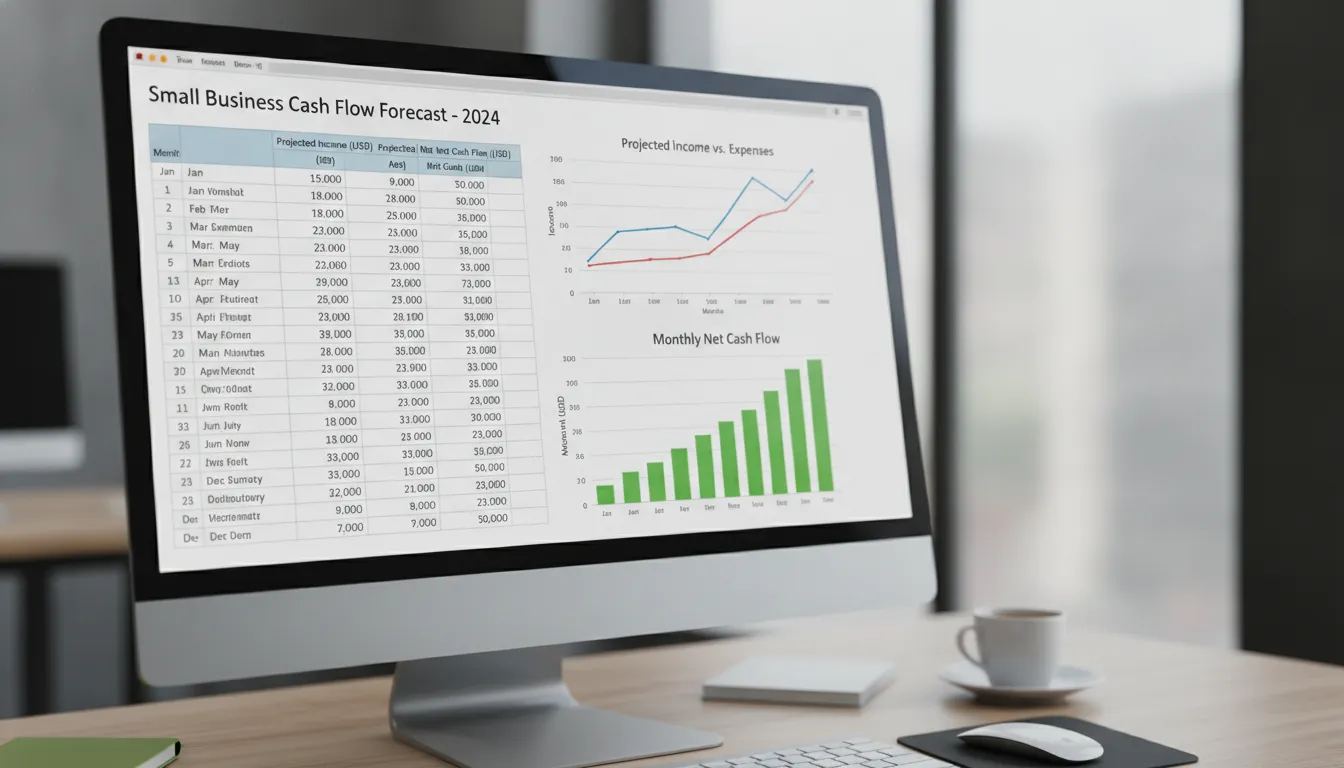
To lead a business, you must look ahead. A 13-week cash flow forecast is the best tool for this job. It shows where your money is now and where it will go next. This plan helps you find gaps before they cause a crisis. You should apply cash management principles to stay safe. This means tracking the net cash moving in and out of your accounts each week.
Steps for a 13-Week Forecast
You do not need a complex system to start. You can use a simple spreadsheet to track your cash. Follow these seven steps to build your first model.
- Check your cash on hand. Look at your bank accounts today. This is your starting point for week one.
- Predict your cash inflows. List the money you expect to get from sales. Include when you think clients will pay their bills.
- Estimate your cash outflows. List every cost like rent, payroll, and taxes. Include fixed costs and variable costs. Do not forget small bills that add up.
- Calculate the net flow. Subtract your outflows from your inflows for each week. This shows if you gain or lose cash in that period.
- Find the ending balance. Add your net flow to your starting cash. This sum becomes next week’s start point.
- Spot the low points. Look for weeks where your cash gets too low. These are your gaps to fill. You can then plan to cut costs or move sales faster.
- Update your plan weekly. Add new data every week. This keeps your view clear as your business grows.
If you need help with these steps, you can use Virtual Outsourced Bookkeeping Services for Growing Businesses. An expert team can set up these reports for you. This is a core part of how we help our clients at TeKoda.
Using Your Data to Grow
A forecast does more than just track bills. It helps you see if you can hire new staff or buy more stock. You can use a break-even analysis to see how many sales you need to cover costs. This is a key part of financial forecasting and budgeting for your small business. When you know your costs, you can set better targets and grow with confidence.
A 13-week view is a rolling forecast. This means you always look 90 days ahead. As one week ends, you add a new week to the list. This habit gives you a clear view of your path. It allows you to make smart choices for the next 3, 6, or 12 months. When you understand your cash, you can plan for the future with less risk.
How Can a Small Business Close the Gap Between Revenue and Cash-in-Hand?
Closing the gap between revenue and cash-in-hand requires three operational changes: speed up your billing process, control your payment timing, and maintain a healthy cash reserve. Together, these practices convert earned revenue into usable cash faster and protect your business from timing shortfalls.
Many small business owners feel the sting of seeing a high profit on paper but a low balance in the bank. This gap often stems from a long wait between doing the work and getting paid for it. When your funds are stuck in unpaid bills, you may struggle to pay your own team or buy new stock.
Learning cash flow management for small business is about more than just making sales. It is about making sure that the value you create turns into real cash as quickly as possible. Using clear data helps you see where your cash is tied up so you can act fast.
Speed Up Your Billing Process
To close the gap, send your bills the moment a job is done. Waiting until the end of the month to send invoices adds a delay that hurts your cash flow. You can also offer a small price break, such as two percent off, for clients who pay within ten days. This type of deal, often called a 2/10 Net 30 term, gives people a reason to pay you fast.
Control Your Payment Timing
Just as you want to get paid fast, you should think about how and when you pay your own bills. Asking for more time with your vendors can keep cash in your business for more days. If a vendor lets you pay in 45 days instead of 30, you have more time to use that money to grow. This focus is a key part of creating a small business money plan that keeps your firm safe.
Maintain a Healthy Cash Reserve
A cash reserve is your best defense against the unknown. Experts often suggest that you keep enough cash to cover three to six months of your normal costs. This buffer allows you to pay for repairs or handle a slow sales month. It also helps you jump on a new chance to grow without taking on debt. To know if your buffer meets the need, you must have clean books. Using a strict monthly bookkeeping close process helps you see fresh data when you check your cash.
What Outsourced Bookkeeping Adds to Your Cash Flow Visibility
Outsourced bookkeeping provides three advantages for cash flow visibility: a clean monthly close with reconciled data. Proactive alerts from real-time monitoring tools, and strategic guidance through a structured growth framework like the TeKoda Way. These elements replace guesswork with actionable financial intelligence.
Running a growing business is hard when you do not know where your money is. Good cash flow management for small business means tracking every dollar that moves in and out. Most owners only see their bank balance, but that does not show the full truth. A virtual team helps you see what is coming so you can stay in control.
A Clear View from a Monthly Close
A virtual outsourced bookkeeping service keeps your books current and clean. The team completes a monthly close to check all your data. This step makes sure that your reports match your bank and credit accounts. Monthly closes help you see your true cash state at the end of every period. Without this, you might make big moves based on wrong numbers.
Alert Flags with Modern Tools
Our team uses cloud tools to find trends early. We mix new software with human work to watch your accounts. This helps us find cash gaps before they become big problems. Top schools define cash flow as the real money going in and out of a firm. We help you track these moves in real time so you are never shocked by a low balance. Our pros flag issues like late pay or high spend as they happen.
Growth Through the TeKoda Way
We use a five-step path to help your business scale. First, we Stabilize your books to fix past errors. Then, we help you Understand your data. This leads to a Plan for your next steps. Once you can Decide with confidence, your business can Grow. This method makes sure you have a strong base before you try to expand. It turns your bookkeeping from a chore into a tool for success.
Scaling requires more than just high sales. You need to know that your growth is safe and funded. Our process gives you the peace of mind to hire new staff or buy new tools. For deep strategy and long-term planning, you may also need fractional CFO services to guide your path. This total approach keeps your cash flow strong as you reach new heights.
Frequently Asked Questions
Do 82% of small businesses fail due to poor cash flow management?
Many reports cite this high rate. While the exact number is debated, experts agree that cash flow is a top reason why businesses close. As shown by U.S. Bank, poor money management is a leading cause of failure. Most startups fail when they spend on growth before they get enough cash from sales to cover their new costs.
What are the five rules of cash flow?
To keep your business healthy, you should follow five simple rules. First, know your cash numbers every day. Second, make a plan for your future cash. Third, get paid by your customers as fast as you can. Fourth, be smart about when you pay your own bills. Last, keep a cash fund for times when money is tight. These steps help you stabilize your finances and grow your small business.
Does my CPA manage my daily cash flow?
Most CPAs focus on tax planning and your year-end filings. They usually do not manage your daily or weekly cash flow. A virtual outsourced bookkeeping team works with you every month to track your money in real time. This service works well with your CPA. It gives them clean books for taxes while you get the data you need to run your business.
How often should a small business update its cash flow forecast?
You should update your cash plan at least once a month. A weekly check is even better for fast-growing firms. Many experts recommend a 13-week rolling plan to see gaps early. As noted by Bank of America, you should also look three, six, and twelve months ahead. Checking your cash often helps you fix problems before they turn into a crisis.
Ready to Fix Your Cash Flow and Grow Your Business With Confidence?
If you do not take the right steps to fix your books, you will keep losing money to bad gaps and high costs every month. You cannot afford to guess when it comes to your bank balance or your plans to hire and grow your team this year. Starting now gives you the data you need to make safe moves and keep your firm on track through every stage of growth.
Schedule Your Free Call Today — Talk to an expert who can help you build a solid financial foundation for your business.
